This post compares AI-powered tools for language conversation practice. The evaluated tools are ChatGPT Voice Mode, Grok Voice Mode, Google Gemini Voice Mode, Talkpal, Langua, and Gliglish, based on personal experience and available information. (I haven’t used Duolingo Max or Babbel’s AI tools, but research indicates Duolingo Max is notable for conversational practice, so it’s included.)
Our focus here is on conversational practice rather than comprehensive language study; and on the free tier rather than the paid plan. The comparison covers six perspectives: generous free trial, real-time transcripts, language detection and code-switching, hands-free operation, accent feedback, and voice quality, followed by overall performance. Note: This content is intended for English speakers learning French.
1. ChatGPT Voice Mode
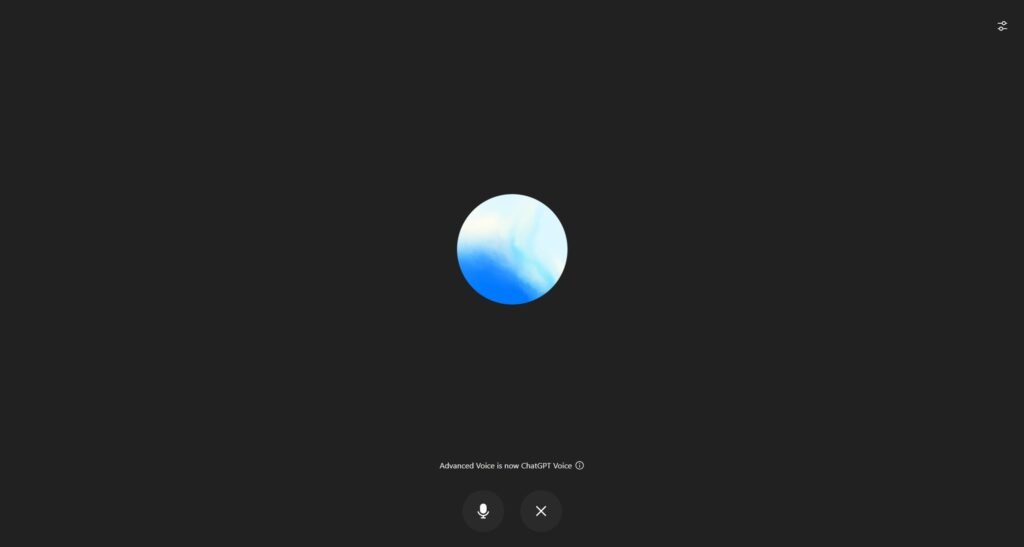
- Description: ChatGPT voice mode, integrated into OpenAI ChatGPT, supports conversational interaction with AI.
- Generous Free Trial: ChatGPT Voice Mode has progressively extended its free usage limits from an initial 3 minutes to 10 minutes, and now offering 30+ minutes of daily conversation time (September 2025) to directly compete with Grok.
- Language Detection & Code-Switching: Handles English/French code-switching well, but language detection during speech recognition is prone to errors, particularly with beginner accents.
- Real-Time Transcripts: Transcripts are not shown in real time; they become available only after the conversation, and may contain inaccuracies caused by language detection errors or accent-related recognition issues.
- Hands-Free: Fully hands-free; no need to press a button once the conversation starts.
- Accent Feedback: Fair; corrects some pronunciation errors, but less effectively than Grok.
- Voice Quality: Human-like, natural-sounding voice.
- Performance: Moderate; friendly but limited by a lack of real-time transcript and weak language detection. The AI voice frequently prompts with “Do you want to speak something else?” after each exchange, disrupting the conversational flow.
2. Grok Voice Mode
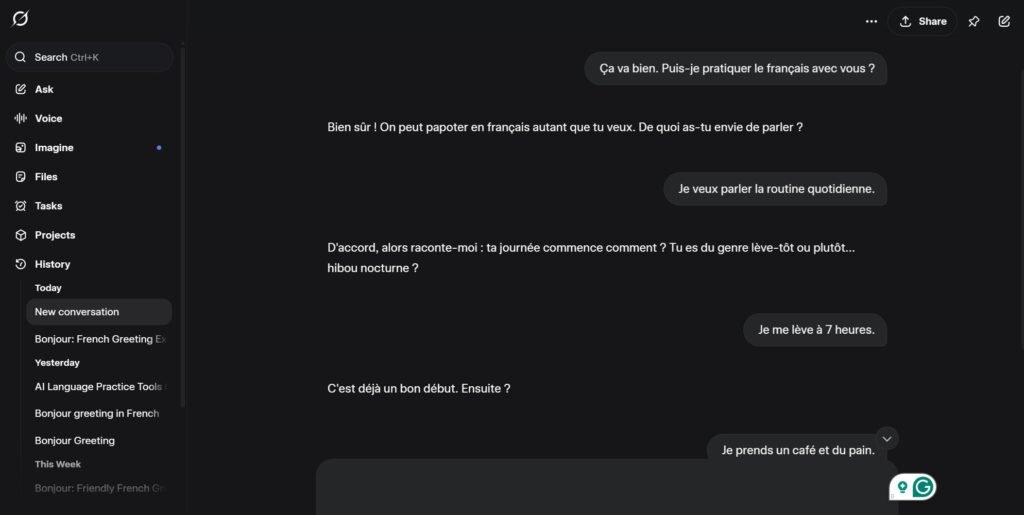
- Description: Grok Voice Mode, developed by xAI, is available on Grok iOS and Android apps, offering AI-driven conversation.
- Generous Free Trial: Most generous, providing >30 minutes of daily conversation time in the free tier (potentially due to initial usage bonuses).
- Real-Time Transcripts: Displays transcripts in real-time and corrects grammar and vocabulary errors (lowest WER per my experience).
- Language Detection & Code-Switching: Excellent; handles English/French code-switching well and understands beginner accents within context.
- Hands-Free: Fully hands-free; no button presses needed after starting the conversation.
- Accent Feedback: Strong; effectively picks up beginner accents and corrects pronunciation errors.
- Voice Quality: Human-like, natural-sounding voice.
- Performance: Best overall; excels in accent detection, real-time feedback, and generous practice time. However, the voice can occasionally sound unfriendly, and the vocabulary used may be too advanced for language learners. This is understandable, as the system isn’t specifically designed for language practice. Performance also appears inconsistent—possibly due to ongoing A/B testing.
3. Google Gemini Voice Mode (Flash 2.5 Fast)
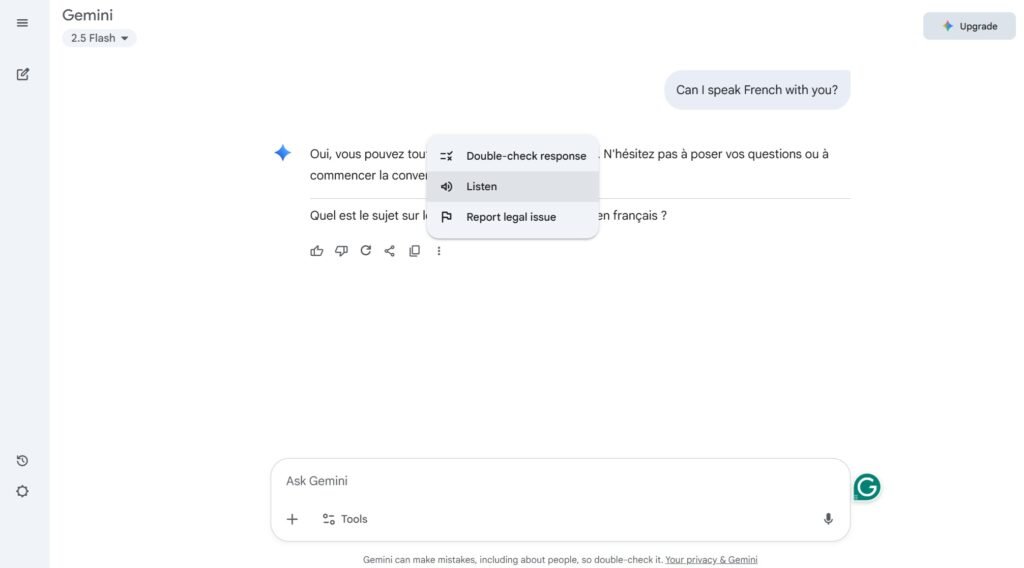
- Description: Google Gemini Voice Mode (flash 2.5) offers AI-powered conversation, integrated into Google’s ecosystem.
- Generous Free Trial: No concrete info on free talk quotas. Typically offers ~10-15 minutes/day based on standard AI model access (web information).
- Real-Time Transcripts: Provides real-time transcripts.
- Language Detection & Code-Switching: Limited support for code-switching; The default language is English. You have to ask in English to switch to other language.
- Hands-Free: Not hands-free; requires pressing a button to talk. On the web version, you need to click “Listen” to hear the voice playback of the transcript.
- Accent Feedback: Poor; struggles to accurately recognize beginner accents.
- Voice Quality: OK, natural-sounding voice.
- Performance: Below average; hampered by non-hands-free operation and weak accent support. (The flash pro version is not tested here.)
4. Talkpal
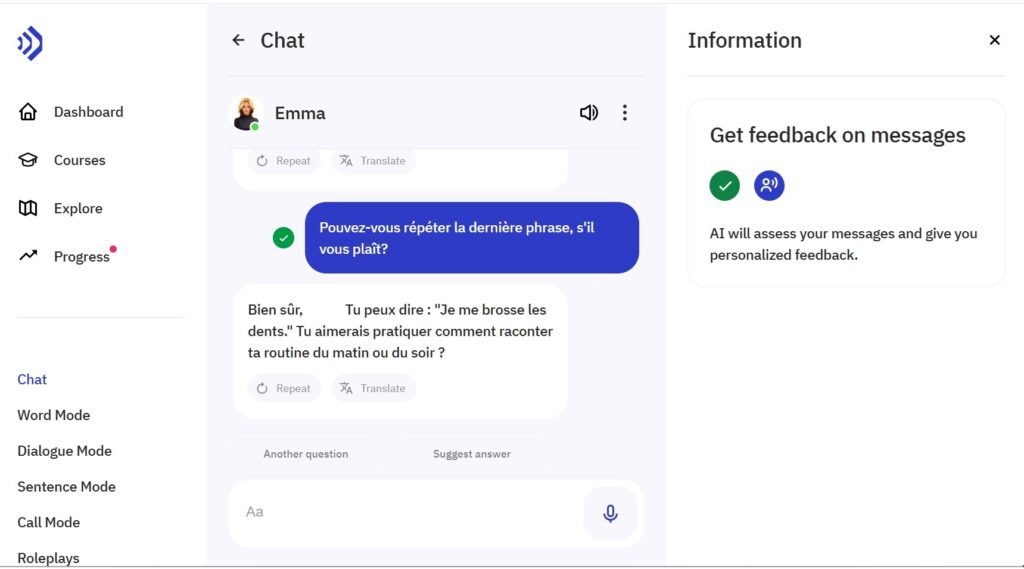
- Description: Talkpal offers AI-driven conversation practice with accent feedback.
- Generous Free Trial: Advertised as ~10 minutes/day, but actual usage is often less.
- Real-Time Transcripts: Provides real-time transcripts with error corrections.
- Language Detection & Code-Switching: Strong; handles English/French code-switching well and corrects transcript errors effectively.
- Hands-Free: Not hands-free; requires pressing a button to talk.
- Accent Feedback: Good; effectively picks up beginner accents and corrects pronunciation errors (Low WER).
- Voice Quality: OK, natural-sounding voice, better than Langua.
- Performance: Good; with a robust feedback loop and effective code-switching, but limited by the lack of hands-free operation. Users may find the promotional emails sent after each practice session annoying.
5.Langua
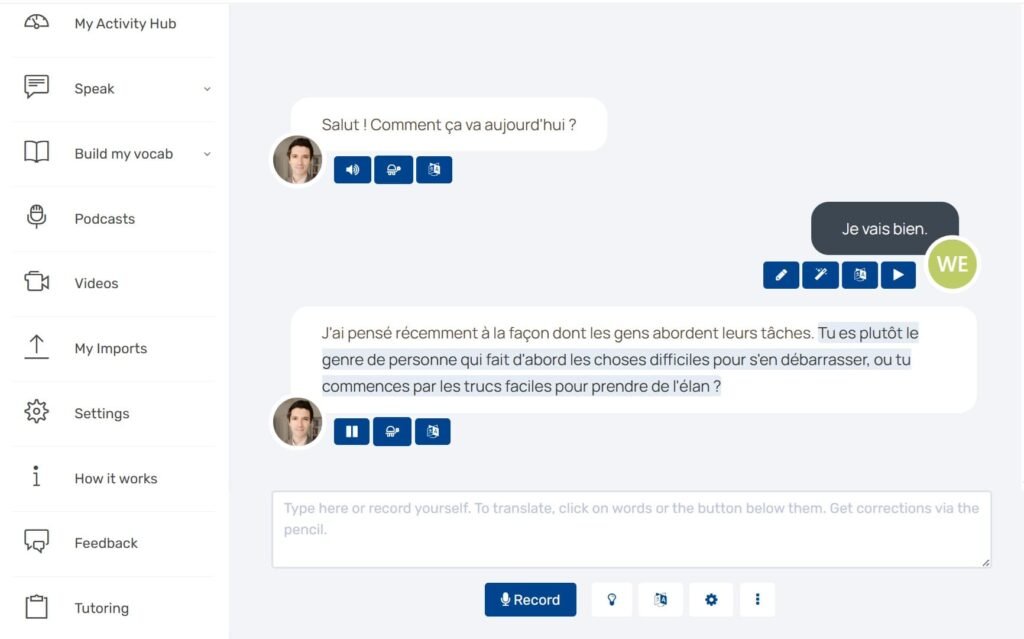
- Description: Langua is an AI-driven voice practice tool, derived from Languatalk, a platform for human language tutoring.
- Generous Free Trial: From my own experience, ~5-10 minutes per week, Least generous;
- Real-Time Transcripts: Provides real-time transcripts.
- Language Detection & Code-Switching: Users must select the target language when you register. The system can understand English but does not respond in English.
- Hands-Free: Not hands-free; requires button presses to talk.
- Accent Feedback: Fair; demonstrates some ability to correct beginner pronunciation error.
- Voice Quality: Robotic, making conversations feel unnatural.
- Performance: Poor; offers the shortest free usage time among all providers, features a robotic-sounding voice, and has limited code-switching capabilities.
6. Gliglish
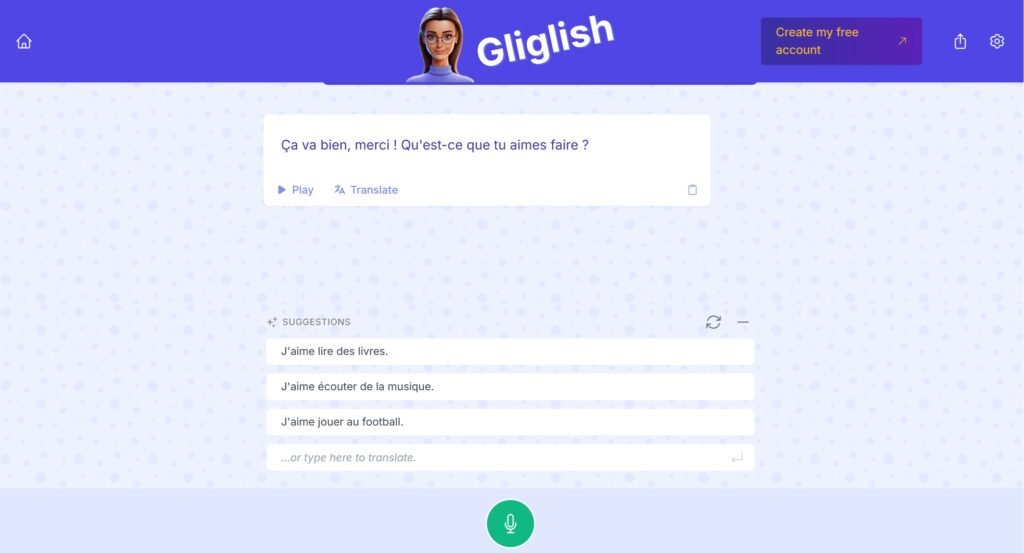
- Description: Gliglish is an AI language learning tool that emphasizes conversational practice and is beginner-friendly.
- Generous Free Trial: Offers ~10 minutes/day in the free tier.
- Real-Time Transcripts: It provides conversation transcripts and suggests prompts for users to speak.
- Language Detection & Code-Switching: You must select a language before starting. While it can translate English input into French in the transcript, the voice output is limited to French and cannot speak English.
- Hands-Free: Not hands-free; requires button presses to talk.
- Accent Feedback: Fair; Provides limited correction for beginner pronunciation.
- Voice Quality: Robotic and unnatural.
- Performance: Moderate; Users can start a trial without creating an account, which is convenient. It’s well-suited for beginners thanks to its accent feedback and suggested prompts, though the robotic voice is a drawback.
7. Duolingo Max
- Description: Duolingo Max, powered by OpenAI’s GPT-4, includes AI Roleplay for conversational practice, though it’s more structured than open-ended.
- Generous Free Trial: Unclear—information varies depending on user type.
- Real-Time Transcripts: Provides real-time transcripts during AI Roleplay (based on web information).
- Language Detection & Code-Switching: Limited code-switching support; optimized for structured dialogues rather than flexible language switching.
- Hands-Free: Not hands-free; requires interaction with the app interface (based on web information).
- Accent Feedback: Information not clearly available.
- Voice Quality: Human-like, natural-sounding voice, enhanced by GPT-4 technology.
- Performance: Effective for structured practice but less suited for open-ended conversations.
Summary
- Grok: My top choice. offers generous free time, accent feedback, contextual understanding, real-time transcripts, and hands-free operation. It effectively understands beginner accents and contextual logic, making it ideal for practice despite occasional inconsistencies and complex vocabulary.
- TalkPal: Robust feedback loop and effective code-switching, but the post-use promotional emails can feel overly aggressive.
- Gliglish: Beginner-friendly, offers transcripts and pronunciation feedback, supports multilingual input (language selection required upfront).
- OpenAI Voice Mode: Friendly personality, but lacks live transcripts and often stalls the conversation, requiring the user to prompt each turn.
- Langua: A viable backup if you prefer the Linguatalk ecosystem, but its AI tool falls short compared to others due to limited free time, no code-switching support, and a somewhat robotic voice.
- Duolingo Max: Worth considering, as it adds Roleplay and explanation features; however, based on current information, it is not yet a top contender for conversation practice.
- Google Gemini – Unsuitable for language learning purposes.