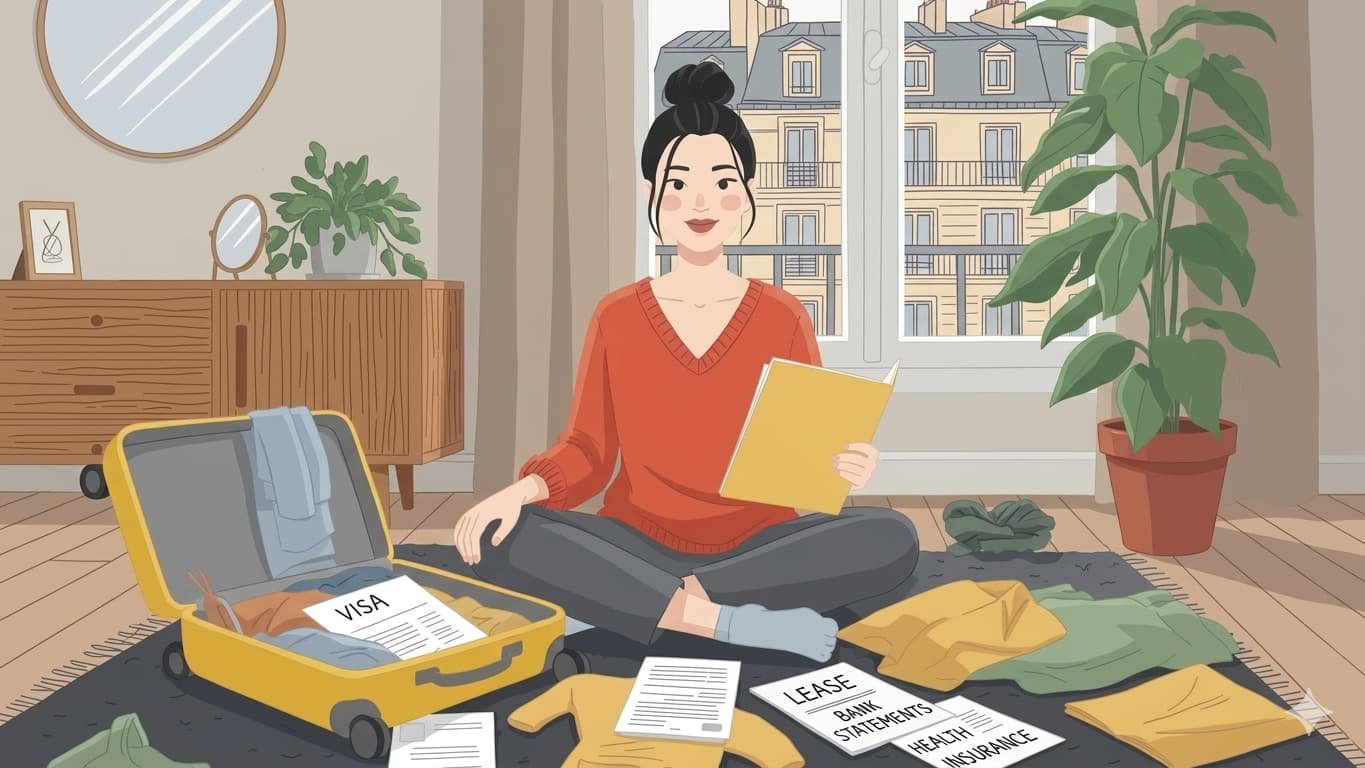
When I moved from the U.S. to France a year ago, I came with a suitcase full of enthusiasm, a carefully folded visa, and a well-organized stack of documents—at least, I thought it was well-organized. I had done my research, and watched every YouTube video I could find on moving to France. I considered myself prepared.
I wasn’t.
Here are a few of the biggest misconceptions I had about French bureaucracy—and how reality slowly (and sometimes painfully) proved me wrong.
1. “You must get a health check within 3 months”—Well, not really.
One of the first instructions I received after arriving in France was to register on the AENF website and expect a health check within three months. Dutifully, I registered just a couple of weeks in. I soon received an email: my appointment would be scheduled “within three months.” Perfect, I thought.
But three months came and went. Silence.
Panic crept in. Had I missed an email? Was my visa in danger? I even went to the immigration office in person, expecting answers. They simply told me to wait. And so I did.
Eventually—four and a half months after I arrived—I had my health check. And guess what? Nobody cared that it was “late.” The lesson? In France, the “three-month” window is more of a polite guideline than a deadline chiseled in stone.
2. “Birth certificate? Surely my naturalization is enough.” Nope.
I came to France prepared—or so I thought. Passport? Check. Visa? Check. Apartment lease, bank statements, health insurance? All present and accounted for.
What I didn’t bring? My birth certificate.
As a naturalized U.S. citizen, I assumed my certificate of naturalization would be the key document proving my identity. Wrong again.
When I applied for health insurance (social security number) through CPAM, they asked for a birth certificate. It turns out that in France, your birth certificate is the document. Not having one from my country of birth has made each step harder—and I’ve since learned it’ll continue to be important all the way to potential French citizenship.
3. “I don’t work, so taxes will be easy.” Hah.
Since I’m on a visitor visa and not allowed to work, I naively thought filing French taxes for the first time would be a five-minute task. No income, no problem, right?
Wrong.

First-time filers must submit paper forms. I waited until April 20, the official release date, only to find the forms weren’t actually available until April 26. And the deadline? May 20. Less than a month to decipher a stack of unfamiliar paperwork, in French. Form 2047—the foreign income declaration—was particularly confusing. Most people I asked had never heard of it. Accountants quoted me 500–600€ and they were swamped with appointments. In the end, ChatGPT became my best friend, and I managed to submit everything on time. But “easy peasy”? Far from it.
4. “I have savings, so I can rent an apartment.” Think again.
When my lease approached its one-year mark, I decided to rent an apartment with more space. I scheduled the viewings, met the agent, and felt hopeful—until I mentioned I didn’t have a job or pay slips.
The agent didn’t even bother handing me the application. I offered to pay upfront, show bank statements, even put down a larger deposit. None of it mattered.
“No payslips, no apartment.” I visited 5-6 agencies and every agency said the same.
Turns out, in France, a job contract and payslips carry more weight than anything else when renting. It’s not personal—it’s policy.
5. “CAF is just for students”—Actually, it might be for you too.
I didn’t even know CAF existed until I met a Korean student who casually mentioned she was receiving housing aid. I assumed it was a student benefit and forgot about it.
Ten months into my stay, as the euro strengthened and my dollar-based savings shrank, I started reconsidering. I dug into the CAF website and realized: I might qualify, even as a visitor.
My CAF application was finally approved after four months of waiting for my residence permit to come through. Here’s what I’ve learned: in France, there is financial support available—you just have to give it a try.
6. “Residence permit takes time”—But this much time?!
To renew my visitor visa and apply for my first residence permit card, I followed the rule: apply 120 days before expiration. I uploaded my documents and waited.
And waited.
With just a month left on my visa, I finally heard back—they needed more documents. They extended my current permit by two and a half months.
Six weeks later, another request. Another extension.
The local prefecture’s website says: average first-time residence permit processing time: 8 months. So much for French efficiency. (According to the official site in my department, the process time for a residence permit has decreased to 6.5 months in 2026)
FAQ
1. Validate your visa and get your residence permit (PDF) — within 3 months of arrival
2. Apply for your social security number and Carte Vitale through CPAM — after your first 3 months
3. File your first French tax return — the following May, once you’ve lived in France for more than 6 months
4. Apply for your physical residence permit card (carte de séjour) — 2 to 4 months before your visa expires