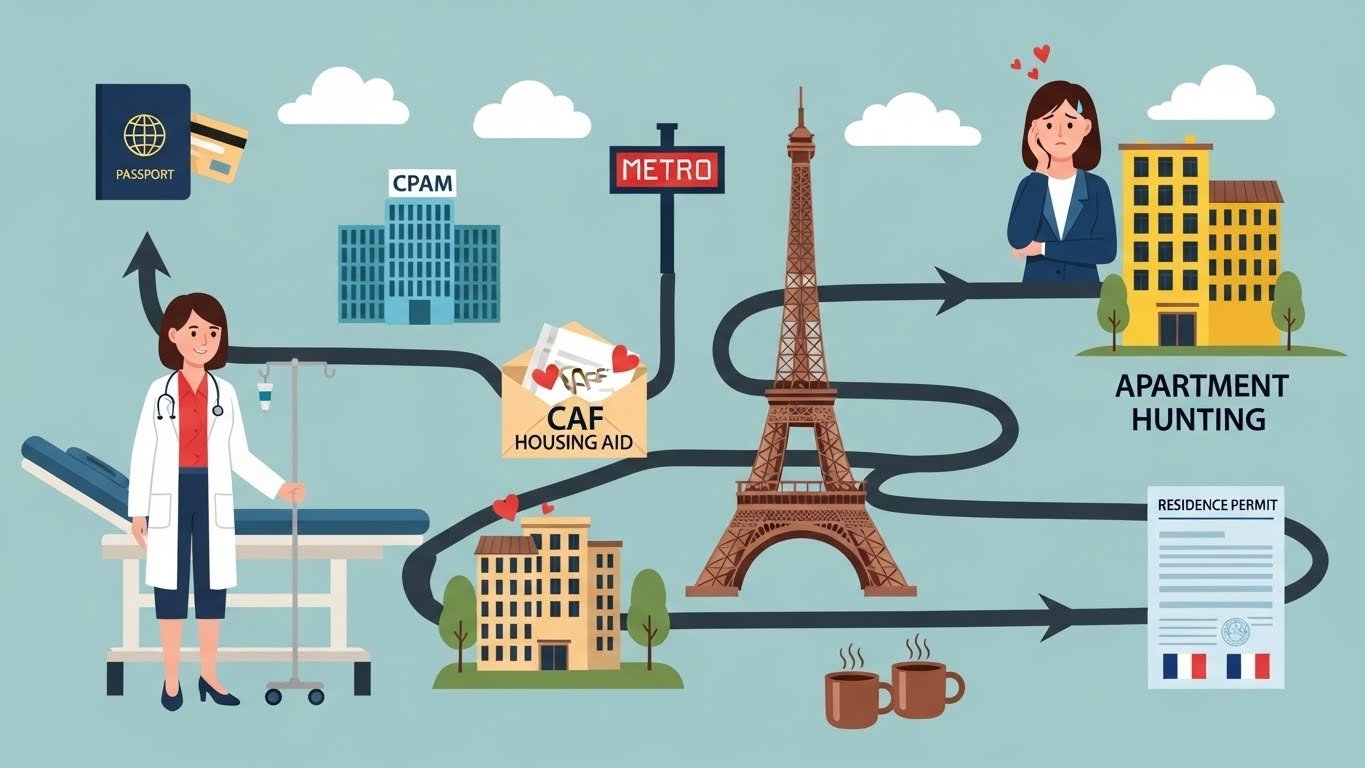
France runs on paperwork: what the administrative system requires directly (visas, carte de séjour, taxes), and what private companies — banks, landlords, employers — ask for. Here’s a roadmap to help you stay on track.
Understanding France’s Administrative System
French bureaucracy refers to the administrative system that manages legal residency, taxes, healthcare, and social benefits in France. It is known for being detailed and paperwork-heavy. Key organizations include CPAM (healthcare), CAF (family and housing benefits), and DGFiP (taxes).
For expats, this often means dealing with visas, residence permits (carte de séjour), social security registration, and tax declarations. Many procedures require official documents, sometimes translated, as well as proof of address or income.
- French Visa
- Healthcare (Carte Vitale)
- Residence permit (Titre de Séjour)
- Taxes
- Visale (Garantie)
- CAF (Aide au logement)
- Driving license
- Citizenship
Paperwork in France’s Private Sector
In France, many private sector activities—such as opening a bank account, applying for a job, or renting an apartment—require a lot of paperwork. This is to meet legal and regulatory requirements.
You will usually need to provide proof of identity (such as a passport or residence permit), proof of address (like a utility bill or lease), and proof of income (such as payslips or bank statements). In some cases, additional documents may be required, including a French social security number, tax documents, or a rental guarantee (for example, Visale).
- Open a bank account
- Rent an apartment
- Buy a property
- Apply for a job
- Setup a company